Insights
AI insights for UK law firms, in plain language.
This is where the free education lives, plain-language writing that explains AI for UK firms without the jargon. Every piece ends with somewhere sensible to go next, whether that is a two-minute readiness check or a short conversation.
New to the subject? Start with the complete guide to AI for law firms.
Prefer to listen? The Legal AI Brief runs the week's developments every Monday.
Articles

What AI judges would mean for your small claims
The Master of the Rolls expects small disputes to move to machines on economic grounds, and parties to settle at the figure a machine predicts.

Copilot for legal arrives switched on
Microsoft's legal skills for Copilot are on by default in Word for every licensed user. What a firm on Microsoft 365 decides before anyone relies on them.

Who owns AI governance in your firm?
Almost one in five legal teams cannot name anyone who owns AI governance, a LexisNexis survey finds. How a small firm names an owner and makes the role work.

The ICO, ten AI developers and the agents to come
Ten AI developers have promised the ICO changes, and the regulator wants evidence on AI agents by 20 November. What both mean for the tools you run on client data.

AI joins the statement of solicitor competence
The SRA wants the competence statement to name AI in research, drafting and a new supervision section. What the draft asks of your firm before it applies.

Agentic AI in the justice system, and your firm
The Law Society expects AI agents to reach small claims, debt and probate first. What that means for the claims you face and the tools your firm runs.

The compliance officer split and your AI
The SRA has paused the compliance officer split to consult on changes. What the pause means for the person who signs off AI in your firm, and what to keep doing.

AI-assisted complaints, and how your firm should reply
The Legal Ombudsman found signs of AI in half the complaint files it reviewed. How to answer a long, legalistic letter a chatbot wrote for your client.

The Online Procedure Rules and the AI code to come
The first digital service under the rules opened for possession claims on 29 September, and the committee behind it is drafting AI standards next.

Recording court proceedings, and the terms a judge set
A Crown Court judge let six barristers record a trial and transcribe it, on terms about storage, deletion and model training. What that means for your firm.

AI adoption is near universal, but fees have not moved
Only one firm in twenty now uses no AI, NatWest finds, yet profit per partner rose two per cent. Why the fee has not caught up and what to change.

Shadow AI, and the tools your staff pay for themselves
Nearly a third of UK workers using AI do so without their employer knowing, Deloitte finds. What that means for a firm holding client files.

The LawtechUK advisory board, and your firm's voice
The Ministry of Justice is picking who advises on lawtech to 2029, and SME legal services is on the list it wants. Applications close 5 October.

Whistleblowing, and who sees your AI mistakes
A junior who reports your firm to the SRA now has the protection of employment law. The internal route is the one you still control.

The AI skeleton argument you have to answer
A litigant in person filed a 300-page skeleton produced with ChatGPT and asked the other side to find the errors. The EAT has said where that work belongs.

AI in the courts, and the gap the minister named
The justice minister has named transcription, listing and case summarisation as the court tools being built. Your files feel that before the headlines do.

What law firm AI budgets now say about profit
Four in five SME firms have committed funds to AI, and the same Crowe survey finds them chasing profit and cash over turnover. What to measure.

What an AI-assisted litigant in person changes
A student with no legal training used AI to build a hundred-page bundle and beat counsel at Oxford County Court. The preparation gap has narrowed.

An AI Bill, and where the liability would sit
A committee of both Houses wants an AI Bill. Its finding on where responsibility sits describes the position your firm is already in.

AI support for jurors, and what it asks of you
A judge has asked peers to put an NHS self-help assistant in front of jurors. A page open to a juror mid-trial sits one question away from an offence.

The Cyber Resilience Act and your suppliers
Software makers selling into Europe must report exploited faults within 24 hours. Your suppliers keep a clock in September they were not keeping in August.

Rogue AI agents and what to ask your supplier
The Hawley letter to OpenAI asks who is liable when AI goes rogue. Four questions to put to any supplier selling your firm an agentic tool.

AI transcription in social work and the family court
JUSTICE warns that AI transcription in social work is affecting the documents that reach the family court, and the original audio is gone in thirty days.

Digital identity, and who verifies your clients now
The government dropped digital ID in July and the NAO has set out why. Nobody is coming to verify your clients for you, and the fakes keep improving.

GPT-6 Astra and what your firm should allow
OpenAI's new flagship is built to operate your software rather than answer questions. The decision it puts to a small firm is about access, not drafting.

AI dependence and what juniors stop learning
A LexisNexis survey of 543 UK legal professionals finds one in ten dependent on AI, and three quarters fearing juniors will never build judgement.

Struck off over AI citations, a tribunal first
The SDT struck off a lawyer who put AI-generated authorities before it, then used AI again to correct them. The first ruling of its kind, and it turned on the second attempt.

The ICO AI guidance timetable to plan around
The regulator has published what it is drafting and when it expects to finish. Two of the entries carry dates inside the next six months.

Clients using AI chatbots to check your advice
One in six people with a recent legal problem has used a chatbot, and JUSTICE read the conversations. Some were checking whether their own solicitor had got it right.

AI declarations in court documents now in force
The Irish High Court rule took effect on 1 September and reaches cases already running. What it asks, and the habit worth borrowing before any English rule requires it.

AI allegations against experts, what a tribunal said
The Home Office put it to a country expert that a machine wrote his report. Three Upper Tribunal judges found no proper foundation for the suggestion.

California's AI rules for lawyers and your firm
Senate Bill 574 would put four duties on a Californian attorney using AI. Three already sit in the rules you practise under, and the fourth is where the two part.

Analysing case data lawfully after Kul v DWF
The Court of Appeal upheld a firm's analysis of 372 claim files naming people who were not its clients. The same test meets any tool reading your caseload.

When legal AI arrives in your cloud platform
Google put contract review and legal research inside the cloud tenancy you already pay for. Who in your firm decides what gets switched on.

When your legal AI vendor builds its own model
Thomson Reuters has trained a model of its own on Westlaw and Practical Law content. What to settle with a supplier that owns the model behind your tool.

Continuing competence and how you learnt AI
The SRA's fourth annual assessment finds almost half of training records silent on how the learning need arose. What to record about the tools you have adopted.

NCSC advice on agentic AI, read for a law firm
The National Cyber Security Centre published interim advice on autonomous tools on 20 August 2026. Its controls turn into the questions you put to a supplier.

What AI consumption pricing means for your firm
The subscription that let a fee earner use a tool freely is giving way to billing by use. What to ask your supplier before the renewal quote arrives.

What your document filing does to AI answers
A benchmark ran the same AI agent over the same files with and without structured context. What it says about your filing, and where to start.

AI memory and your firm's ethical walls
A legal AI platform relaunched with memory at its centre. The conflicts question it raises reaches every firm using an assistant that learns.

The SRA warning notice on AI misuse
The regulator has moved from explaining the rules to warning the profession, after 42 reports of possible AI misuse in a year and investigations now open.

When a supplier outage stops your client checks
LexisNexis pulled three Nexis products after trouble at a company most of its customers had never heard of. The gap it left is the one your firm should plan for.

AI-native law firms and what they change
Fifty-eight regulated practices now describe themselves as built around AI, and a technology divorce service has applied to the SRA for family work and conveyancing.

What an AI review finds in a twelve-partner firm
A twelve-partner firm built on paper, the three things a review turns up and the arithmetic behind the business case, with every assumption open to challenge.

AI agent handoffs between your suppliers
Two suppliers have agreed a way to pass half-finished work between them. The consent point lands on your fee earner, so the rule has to reach them first.

AI watermarks are now inside your firm's drafts
Claude now marks the text it writes and edits, and the mark survives a copy and paste. What it exposes is your process rather than the technology.

Deepfake identity checks and your AML duties
Deepfakes and AI impersonation are now named in the SRA's risk assessment. Remote onboarding and video checks in conveyancing deserve a second look before a fraudster gives them one.

What the EU AI Act now asks of your business
The Act became applicable on 2 August and the omnibus fixed the rest of the timetable. What binds a business now, and the client work it creates.

AI and your firm's sustainability claims
Environmental reporting at most firms counts travel and paper while AI runs all day. Naming the omission is the easy part, fixing it takes a supplier question and an owner.

What the AI Growth Lab admits about the rules
Read as an admission, the AI Growth Lab is the more useful document. Four regulators concede in it what their rules do not yet settle.

Claude for Legal gets its first head, what it means
Anthropic has put a named head in charge of Claude for Legal. Your firm's due diligence questions finally have an address, so send them.

Measuring AI adoption in your law firm
Switch-on numbers flatter every rollout. Whether the work itself changed is a different question, and a ninety-day count answers it.

Legal AI consolidation and your law firm
Five acquisitions by one supplier in a single year. When a tool your firm relies on changes hands, the contract you signed decides how much that matters.

Witnesses using AI to prepare for court
A witness who rehearses their evidence with a chatbot puts that evidence at risk, says the Court of Appeal. A paragraph in your client care letter deals with it.

Legal AI spending, where the money went
LexisNexis's owner has published its half-year figures, and the market's AI money is flowing into subscriptions firms already hold. Check what your renewal quietly added.

Specialist legal AI or a general assistant
Microsoft's own legal team took on a specialist legal AI platform while keeping the general assistant it already ran. The reasoning applies to far smaller firms.

The CPS's hallucinated cases, a lesson for law firms
Two invented authorities reached the High Court in a CPS matter before anyone noticed. Tobosaru is the verification lesson every firm hopes to learn secondhand.

AI and your firm's professional indemnity cover
Your PI insurer now asks how the firm governs AI. What underwriters want to see at renewal, and the cover risk of leaving AI unmanaged.

Your duty when a new AI model handles client data
Kimi K3 has arrived from abroad and ranks near the top. The confidentiality duty a firm owes before it lets any new model near client data.

The AI Growth Lab, what law firms should know
The government has opened a supervised sandbox where firms and their suppliers test AI tools with the regulators watching. What it offers a smaller firm, and what it does not.

AI providers enter legal, what your firm weighs
The AI model makers now sell into legal work directly and firms are signing partnerships. What a smaller firm should weigh before it ties itself to one platform.

Automated decisions, AI and your law firm
The Data (Use and Access) Act 2025 moved automated decision-making from prohibition to permission with safeguards. What that change lets your firm build, and what it demands in return.

GPT-5.6 goes public, what your firm does now
OpenAI has released GPT-5.6 to everyone after weeks of government limits. The capability jump is real. Your firm's duty to check and protect is not.

The judiciary's AI guidance, read for law firms
The judiciary's AI guidance tells judges how to approach these tools. Read closely, it also tells a law firm how the bench will read AI-assisted work.

ICO AI and data protection guidance for law firms
The ICO's guidance on AI and data protection maps every UK GDPR principle onto AI systems. Here is what a law firm should take from it.

Multi-model legal AI, what your firm should ask
The larger legal AI platforms now run on several models at once and route work between them. That shifts your due diligence from which model to how the platform handles your data.

AI in court documents, the CJC's emerging line
The Civil Justice Council has signalled that solicitors who draft court documents with AI face no new disclosure rule, because the named lawyer already carries the responsibility.

When not using AI becomes negligence
The UK Jurisdiction Taskforce says a professional can be liable for using AI badly, and for failing to use it where a competent practitioner would have.

When your AI can send email in the firm's name
AI assistants can now send email, book meetings and file documents in your practice systems. Write access is a decision, not an upgrade.

The EU AI Act deadline that touches UK firms
From 2 August 2026 the EU begins enforcing its rules on general AI models. The transparency duties reach beyond the EU, and your vendor checks get sharper.

What clients now expect AI to do to your fees
New Deloitte research finds most in-house counsel want lower bills from their firms' use of AI, and expect the hourly rate to give way to fixed and value based pricing.

When your AI assistant works while you sleep
AI assistants now run on their own, in the background and from a phone. For a firm that raises fresh questions about confidentiality, supervision and control.
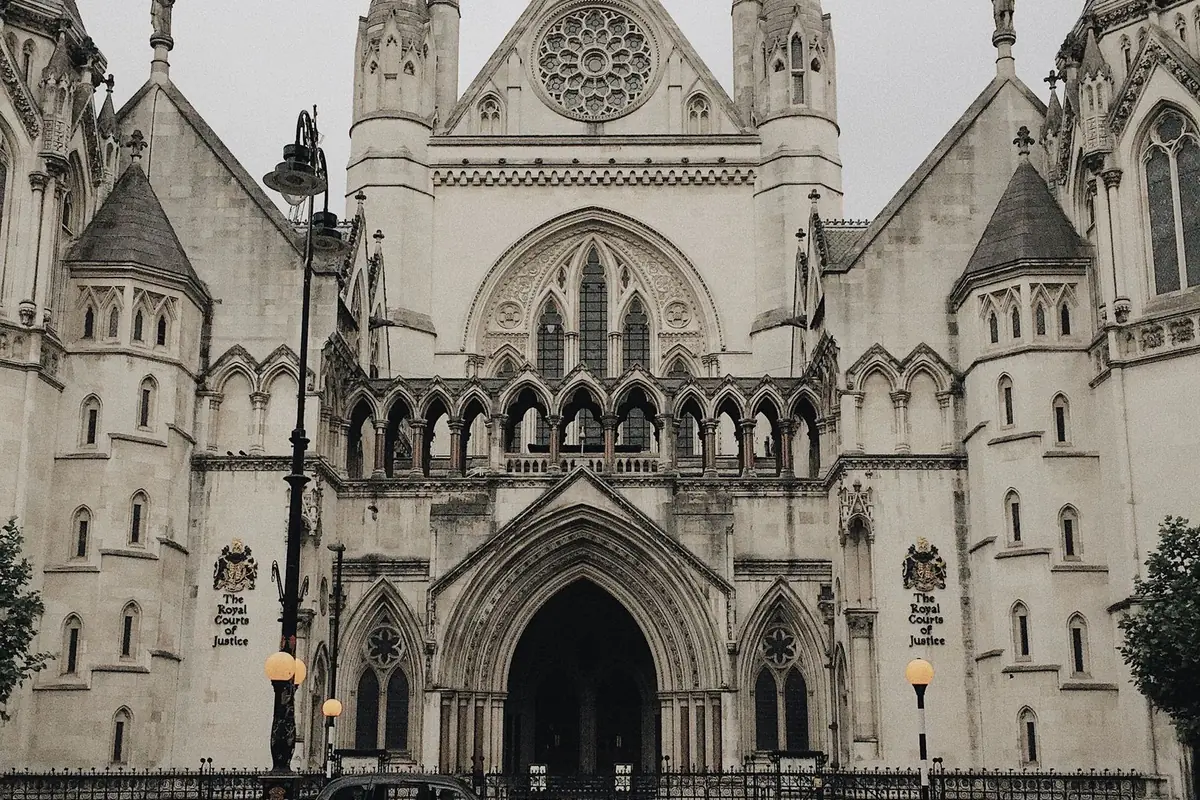
Mazur, AI and the question of conducting litigation
The Court of Appeal settled who may supervise litigation work. It left open whether an AI tool that makes case decisions crosses a line the law reserves for people.

Verify before you file
The count of AI hallucination cases keeps climbing. A simple check between the AI draft and the filing is now part of your duty to the court.

The SRA's rewritten supervision guidance
The regulator has expanded its supervision guidance from nine pages to twenty-four. A named authorised person must stay accountable for AI-assisted work.

A court's warning on AI hallucinations, and who stays accountable
A ruling found a firm had misled the court through AI hallucinations, and set out plainly where accountability sits.

When your AI disappears for nineteen days
A capable AI tool vanished for about nineteen days under export controls. For a firm that had built it into daily work, that is a continuity problem.

Fable 5 and Mythos 5, pulled and restored
Anthropic's most capable models were suspended for about nineteen days under US export controls, then restored. Here is what happened and why it matters.

Claude Sonnet 5, and what a cheaper, sharper model means for your firm
Anthropic has released Claude Sonnet 5, close to its top model in capability at a lower price. Here is what that shift means for a law firm.

The SRA and AI, what the rules require of you
Where your regulatory duties bite when you put AI to work, and how to stay on the right side of them.

Client confidentiality when using AI tools
How to keep client data inside the firm, choose tools that respect it, and prove that you did.

Choosing legal AI tools for the small firm
A buyer's guide for telling substance from hype before you sign anything.

Stopping AI mistakes reaching your advice
Why general models invent cases and citations, and the checks that keep a fabricated authority out of a letter or a filing.

UK GDPR when client data meets AI
Lawful basis, data minimisation and the question every small firm should ask a vendor: where does our client data go, and who can read it.

The real cost and return of legal AI
Licences, training and the hours saved on research and drafting, worked through for a firm of two to twenty fee earners.

Writing an AI use policy your team will follow
A short, plain policy is the difference between staff guessing and staff knowing. Here is what a workable AI policy for a small firm contains.

Where AI helps with drafting, and where it does not
AI drafts quickly and confidently. The skill is knowing which drafts to trust and which to treat as a starting point only.

AI for legal research without the risk
A general chatbot is the wrong tool for legal research. A tool built on real law is a different proposition, used with care.

Training your team to use AI responsibly
A tool is only as safe as the people using it. Short, practical training is what turns a policy on paper into habit.

Professional indemnity and AI, what insurers expect
Your insurer has a view on how you use AI, even if they have not said so yet. It is worth getting ahead of the question.

Moving client data across borders with AI
Many AI tools process data outside the United Kingdom. When client data crosses a border, the UK GDPR has something to say about it.

Keeping clients informed when you use AI
Clients are entitled to know how their matter is handled. Where AI plays a part, a little candour protects the relationship and the retainer.

Document review and disclosure with AI
Reviewing a large set of documents is where AI can save the most time, and where a careless approach can do the most damage.

AI in conveyancing for the smaller firm
Conveyancing runs on volume and tight margins, which is exactly why AI is tempting, and why the duties around it need care.

AI in family law, sensitivity and safeguards
Family work is among the most sensitive a firm handles. AI can help with the load, but the data deserves particular care.

The confidentiality trap in AI note-takers
AI meeting assistants are everywhere, and they quietly record and send client conversations to a third party. That is the trap.

Cyber security when you adopt AI
Every new tool is a new door into the firm. AI tools are no different, and a few basics keep them from becoming a way in.

Marketing your firm with AI, honestly
AI can write your marketing in minutes. The duty not to mislead means you still have to stand behind every word.

Retention and deletion when AI holds your records
If an AI tool holds copies of client data, your retention and deletion duties follow the data into the tool.

Supervising staff who use AI
The duty to supervise does not pause because a junior used a tool. If anything, AI makes good supervision matter more.

The contracts to read before you buy AI
The demonstration sells the tool. The contract decides whether it is safe for a law firm to use.

AI and access to justice for the small firm
Used well, AI can let a small firm serve clients it could not afford to serve before. That is a quieter benefit worth naming.

Building your firm's AI roadmap for the year ahead
Adopting AI well is a sequence, not a single decision. A simple roadmap keeps the firm moving without overreaching.
News from the firm
What the firm publishes, and a talk we can bring to yours.

A plain-language guide to the SRA and AI
Our guide to what the regulator expects when a firm puts AI to work is part of the Insights library.

Saqib Khan on AI for the smaller practice
A talk on adopting AI safely in firms of two to twenty fee earners, from duties first to a tool that earns its place.
The list
Stay in touch.
The writing connects to one email list, so readers hear when something useful goes out. No noise, one clear next step each time.
One email when a new piece goes out, nothing else, and a reply takes you off the list. See the privacy policy.